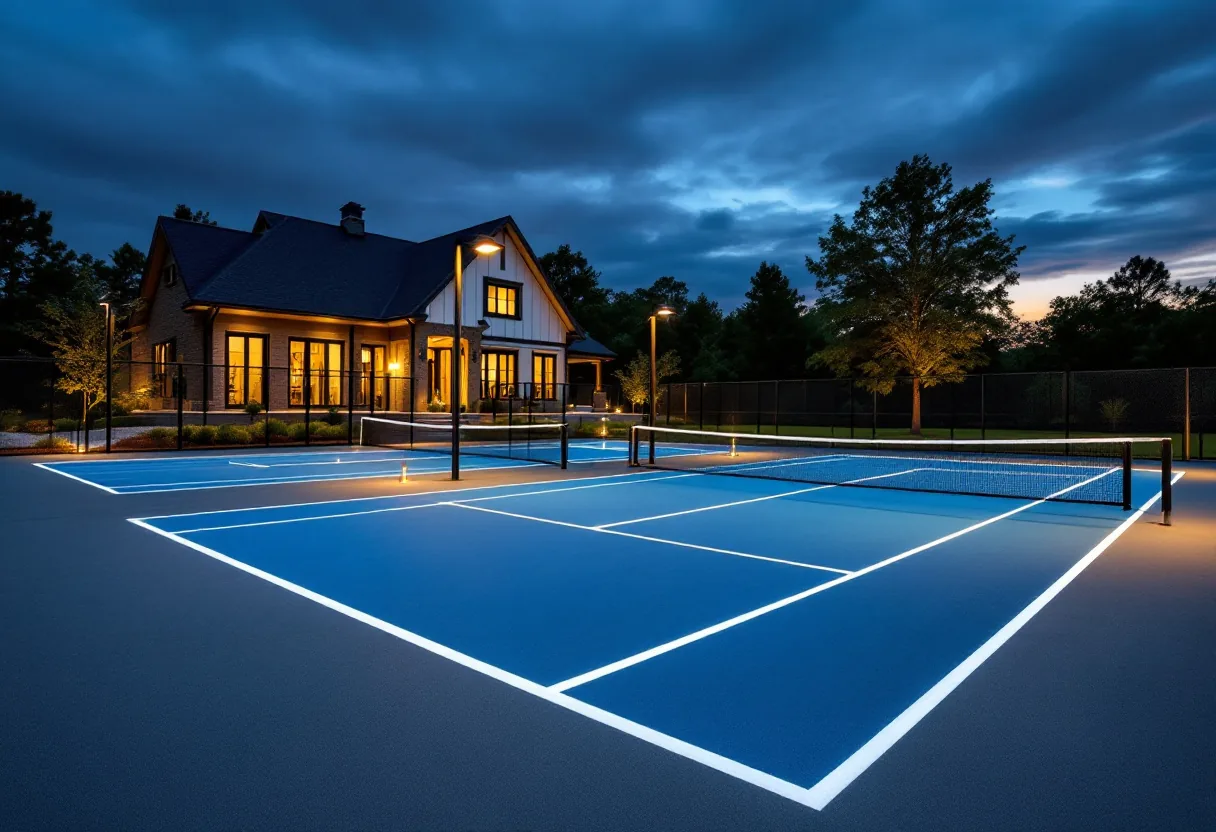
By the time you are choosing colors, the expensive decisions are already made. The base and the surface system are where the money goes — color is the last layer, and on most builds it is included in the price you have already agreed to. That makes it the highest-impact, lowest-cost decision in the whole project, which is exactly why it is worth thinking about for more than five minutes. A good scheme makes the ball easy to track, keeps the surface comfortable underfoot, and makes the court look intentional instead of accidental. When you are ready to price the whole build, our cost calculator and a free builder quote will fold the color coat in.
Pick two contrasting colors — one inside the lines, one outside — with white 2-inch lines between them. Blue inside with green outside is the classic. Go lighter in hot, sunny climates and darker only where surface heat is not a concern. Standard manufacturer colors are usually included; custom matching and logos are quoted separately.
How a court is actually colored
On an acrylic hard court, color comes from a pigmented acrylic color coat rolled over the prepared base — the same system whether the base is concrete or asphalt. That coating comes in a manufacturer palette rather than an unlimited paint-store range, so you are choosing from a set of proven, UV-stable colors rather than matching a swatch off your phone. Modular tile courts work differently: the color is the tile itself, so your palette is whatever that manufacturer molds. Either way, the choice is made before installation day, not after. Our surfaces guide walks through how each system is built up.
Inside vs outside: the contrast that matters
Nearly every court uses two colors: one for the play area inside the lines and a second for the surrounding apron. The regulation play area is 20 by 44 feet, and we recommend a fenced pad of about 30 by 60 feet, which leaves a generous band of the outside color around the court. That contrast is not just decoration — it gives players an instant read on in versus out at the edge of their vision, and it visually frames the court so it looks finished rather than like a slab with lines on it.
The most common pairings:
| Scheme | Inside / outside | Best for |
|---|---|---|
| Classic tournament | Blue inside, green outside | The safe default; reads instantly as a sport court |
| All-green two-tone | Light green inside, dark green outside | Blending into landscaping and wooded lots |
| All-blue two-tone | Light blue inside, dark blue outside | A cohesive, modern look with strong ball contrast |
| Premium dark | Charcoal or navy inside, gray outside | High-end residential; hotter underfoot in full sun |
| Club branded | Facility colors, logo at center or apron | Commercial and HOA courts building an identity |
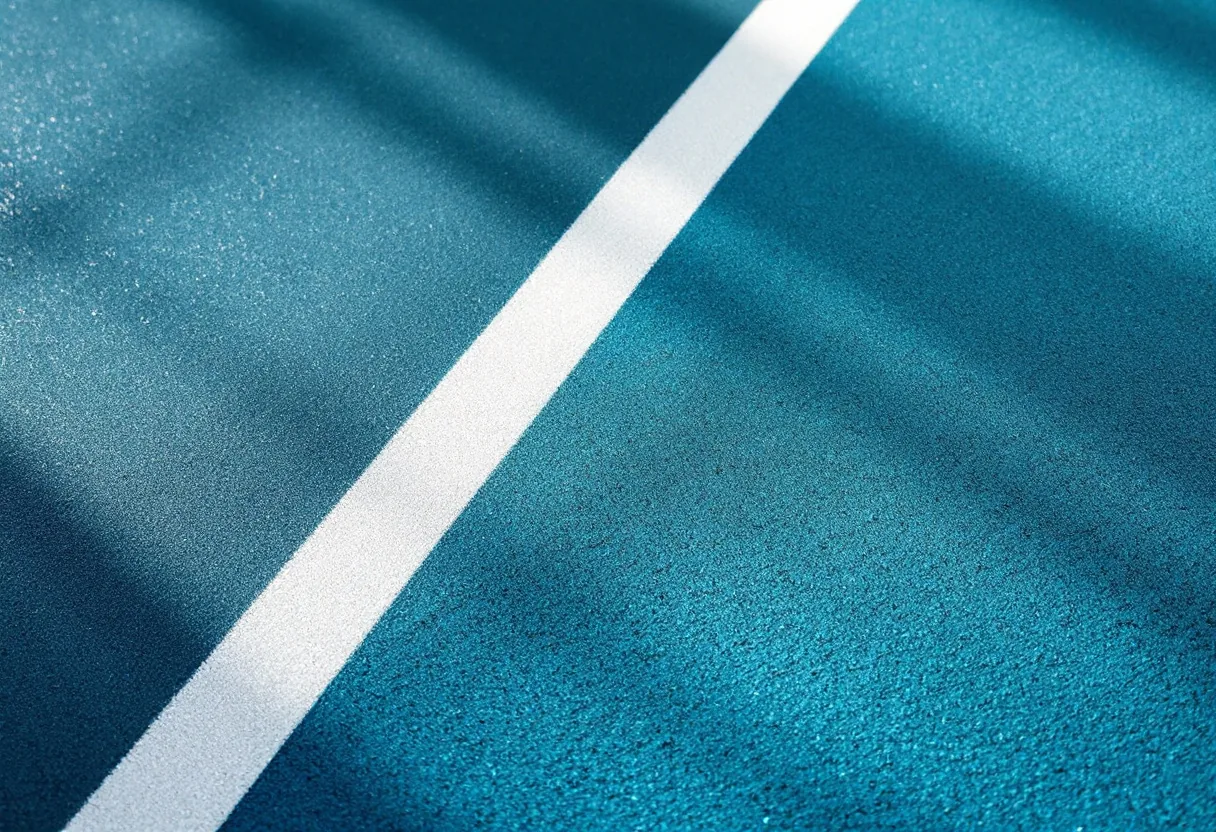
Lines: white, two inches, and no cleverness
Lines are 2 inches wide and should be a clean white that contrasts sharply with both of your chosen colors. This is the one place to resist creativity. Tinted or low-contrast lines make close calls harder and age badly. If your court is shared with another sport, you will end up with a second set of lines in a different color, and that is where a careful color plan pays off: keep the pickleball lines white and dominant, and run the secondary sport's lines in a color that is clearly subordinate. Get the layout right first with our court dimensions guide.
Heat, glare, and climate
Darker surfaces absorb more solar heat, so a charcoal or deep navy court will be meaningfully hotter to stand on in midday sun than a lighter green or blue. In hot, sunny markets that is a genuine playability issue, not an aesthetic footnote — it affects how long people want to stay on the court in July. On the other end, very light or high-gloss surfaces can throw glare, especially with low morning and evening sun. The practical middle ground is a medium-value color inside the lines with a matte finish, which is exactly why the traditional blues and greens have stuck around. If you play at night, coordinate your color choice with your court lighting plan, since lighter surfaces reflect more of your fixture output back up into the play area.
Custom colors, logos, and what they cost
Standard palette colors are typically included in the surface pricing you are already quoted. What costs extra is labor: custom color matching, more than two color zones, a logo at center court, or decorative striping all mean additional masking, additional coats, and additional days. Builders quote that work per project rather than off a price list, so ask for it to be itemized separately in your estimate — that way you can see exactly what the branding is costing you and decide accordingly. For a private backyard court, sticking to the standard palette is usually the smart money. For a commercial or club facility where the court is part of the brand, a logo and custom colors often earn their keep in photos and member pride.
Resurfacing is your reset button: color is not permanent. Every resurfacing cycle is a chance to change the scheme entirely, so if you are torn, pick the safe option now and revisit it later. See our resurfacing guide for what that cycle looks like.
Choosing yours
Work in this order: start with climate, which sets how dark you can reasonably go. Then pick the outside color to sit well against your house, landscaping, or facility. Then choose an inside color that contrasts strongly with it. Keep the lines white. Finally, decide whether a logo or custom match is worth the add-on for your situation. Whether it is a backyard court or a multi-court commercial complex, a free itemized quote will show you the color coat priced alongside everything else.
Frequently asked
White, 2 inches wide, with strong contrast against both the inside and outside surface colors. If the court is shared with another sport, keep the pickleball lines white and dominant and run the secondary sport's lines in a clearly subordinate color.
Almost always, yes. Two contrasting colors help players read in versus out at a glance and visually frame the court. With a 20 by 44 foot play area on a recommended 30 by 60 foot pad, the outside color forms a wide, visible border.
Yes. Color lives in the acrylic color coat, so every resurfacing cycle is an opportunity to change the scheme. That is one reason it is fine to choose a conservative palette now and revisit it in a few years.