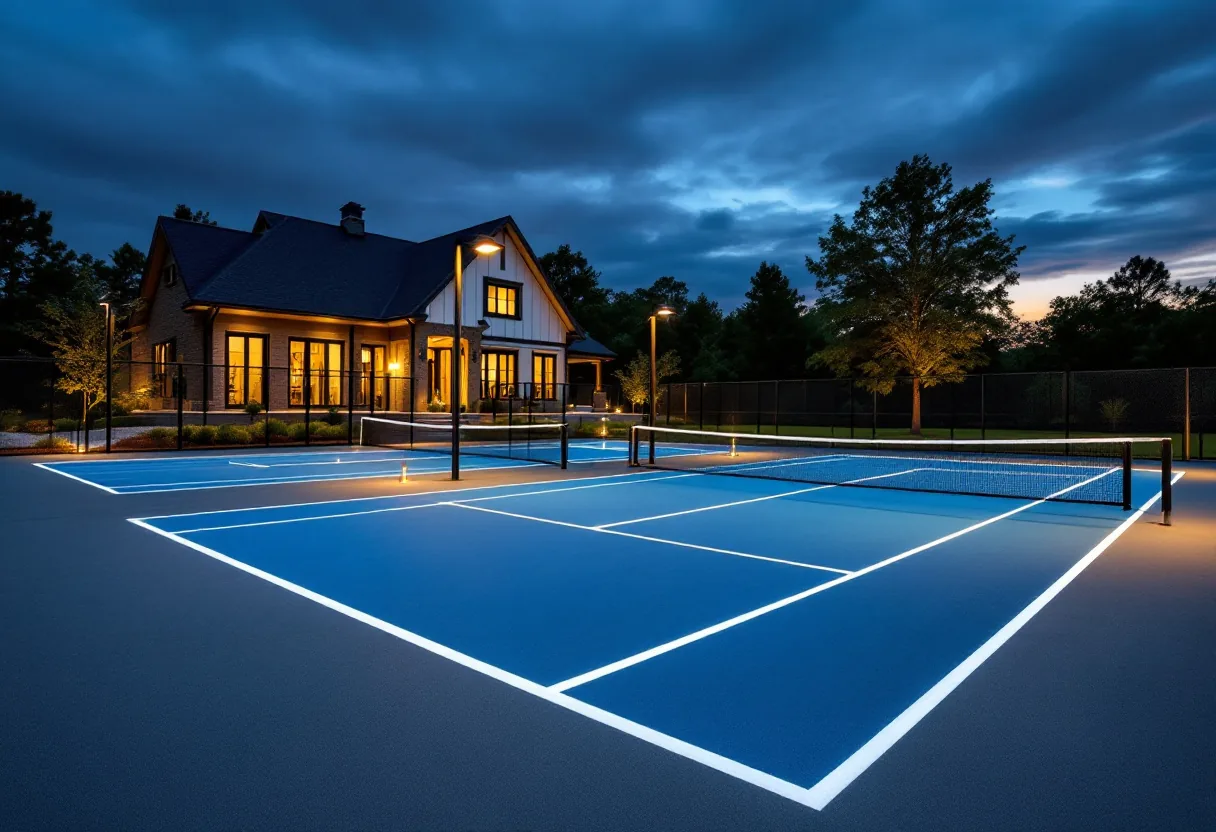
People tend to worry about court maintenance before they build and then ignore it entirely afterward. Both instincts are wrong. A well-built acrylic hard court is not a demanding thing to own, but it is also not a set-and-forget one. The routine work is simple enough that most owners do it themselves in a few minutes at a time, and the one real recurring expense — resurfacing — is predictable enough to budget for from day one. What turns a court into a money pit is neglect that lets a surface problem become a base problem. If you are still in the planning stage, our cost guide and cost calculator will help you size the build itself.
Sweep it often, keep water moving off it, and resurface it every 4 to 8 years. Everything else is a variation on those three. Resurfacing typically runs $1,500–$3,500 on a 30 by 60 foot pad and is the only line item you need to plan for.
The maintenance schedule
Frequency matters more than effort here. Small, regular attention keeps the surface intact; occasional heroic cleanups do not.
| Interval | What to do | Why it matters |
|---|---|---|
| Weekly, or before play | Sweep or blow off leaves, grit, seeds and pine needles | Grit under shoes polishes away the gritty texture that gives the surface its grip |
| Monthly | Walk the perimeter; clear the fence line, drains and swales of debris | Blocked drainage is the single most common cause of standing water |
| A few times a year | Wash the surface with water and a soft brush; treat mildew or algae in shaded corners | Organic growth is slick, stains the color coat, and holds moisture against the surface |
| Seasonally | Check net posts and hardware, tighten fence fittings, wipe light lenses | Hardware fails quietly; a leaning post or dim fixture degrades play long before it breaks |
| Annually | Inspect for hairline cracks, low spots that hold water, and worn or faded lines | This is the inspection that tells you where you are in the resurfacing cycle |
| Every 4–8 years | Full resurface: crack repair, resurfacer coat, two color coats, new lines | Restores grip, color and safe play for a fraction of the cost of rebuilding |
Water is the thing to watch
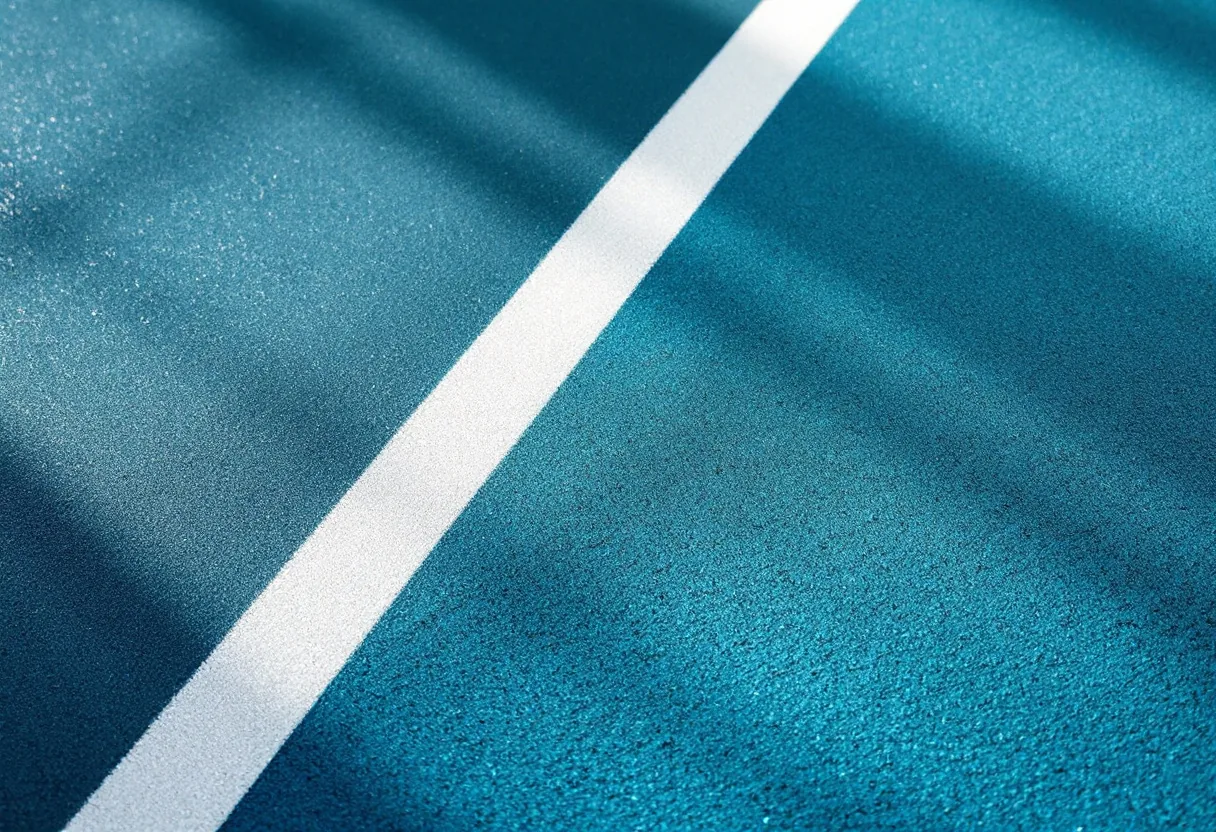
Nearly every serious court failure starts with water that had nowhere to go. A court is built with a deliberate slope so rain sheds off it; when a drain clogs, a swale fills in, or landscaping grows into the runoff path, water pools instead. Puddles that linger after a rain — the ones builders call birdbaths — are worth taking seriously, because standing water works into hairline cracks, and in freeze-thaw climates it expands there and widens them every winter. Clearing debris from the drainage path is the highest-value five minutes in court ownership. If puddles keep reappearing in the same spot after the drainage is clear, that is a base or slope issue, not a cleaning issue, and it is worth a builder's eye before your next resurface.
Cleaning without damaging the surface
Water, a soft-bristle push broom, and mild detergent handle almost everything. What to avoid: aggressive pressure washing, wire brushes, and harsh solvents, all of which can strip or thin the acrylic color coat you are trying to protect. Mildew and algae in shaded corners respond to a diluted cleaning solution and a soft brush; if a builder installed a specific surface system, follow the manufacturer's cleaning guidance for it. Modular tile courts are different again — debris falls through the tiles rather than sitting on them, so cleaning is easier, but the substrate underneath still needs to drain. Our surfaces guide covers how each system behaves over its life.
What routine care will not fix
Maintenance protects a sound court. It does not repair one that has moved. Cracks wider than a hairline, sections that have heaved or settled, and drainage that fails across the whole slab are base problems, and putting a new color coat over them buys a season or two at most before the crack reappears in the same place. That is the honest test to apply before spending: if the base is stable, resurfacing is excellent value; if it is not, a builder should assess the slab first. Our resurfacing guide walks through the warning signs and what the work involves.
Budget it up front: if you are building a court now, pencil in a resurface in year five or six. On a backyard build in the $20,000–$50,000 range, a $1,500–$3,500 resurface every several years is a modest cost of ownership — but only if it is planned rather than discovered.
Commercial and HOA courts
Shared courts run through the cycle faster, simply because more feet cross them. A busy club or HOA court usually sits at the short end of the 4 to 8 year window, and the calendar above is worth assigning to a person rather than leaving to whoever notices first. Facilities with multiple courts get some economy in resurfacing them together, so it is often worth putting the whole complex on one schedule rather than resurfacing court by court as each one fades. Fencing and lighting deserve the same treatment — see our guides to court fencing and court lighting for what wears and when.
Frequently asked
Weekly is a good default, and before play if the court sits under trees. Grit and seeds tracked underfoot act like sandpaper and slowly polish away the textured finish that gives the surface its grip.
Use caution. Aggressive pressure washing can strip or thin the acrylic color coat. Water, a soft-bristle broom and a mild detergent handle nearly everything, and any manufacturer guidance for your specific surface system should take precedence.
No. Routine care extends the life of the surface but does not renew it. Expect a full resurface every 4 to 8 years, typically $1,500 to $3,500 on a 30 by 60 foot pad, and treat that as a planned cost of ownership rather than a repair.