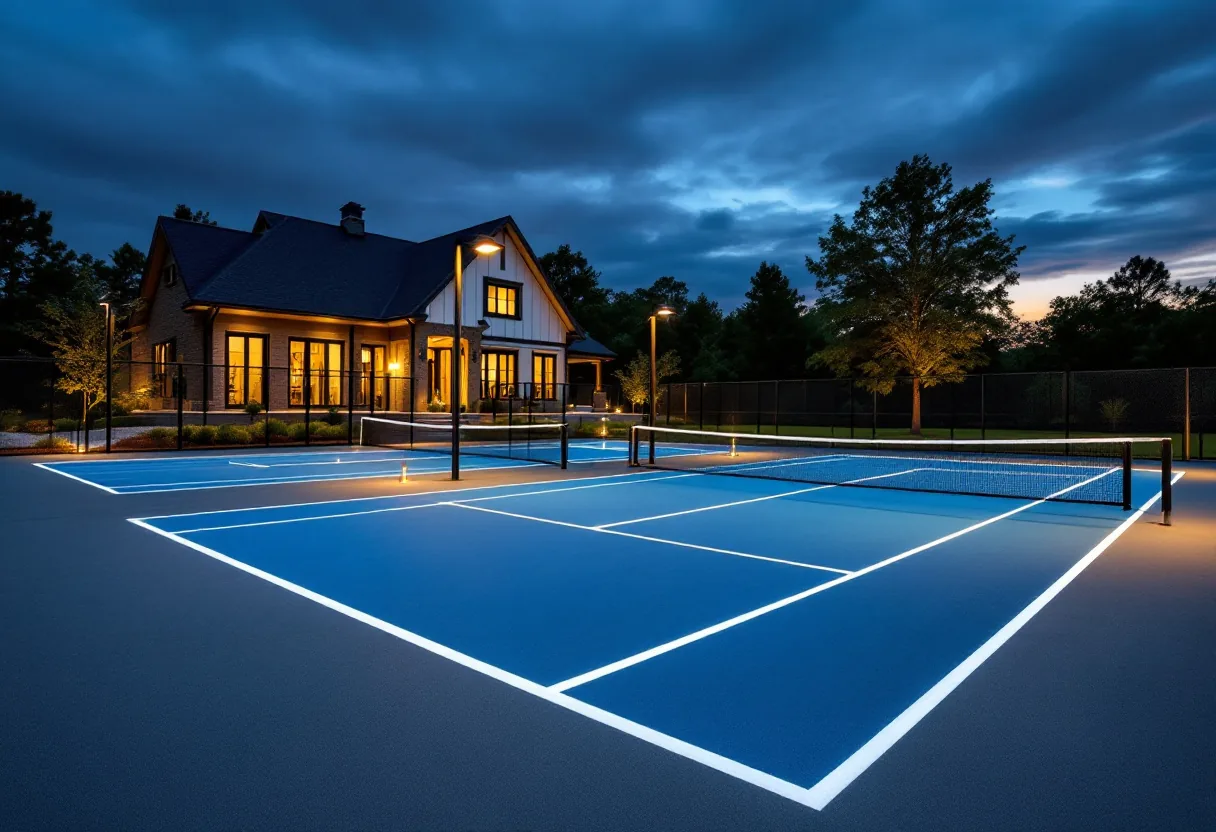
Ask anyone who has fought an HOA board or a zoning hearing over a court, and they will tell you the same thing: the objection is almost never the court itself — it is the sound. Getting ahead of that with smart design is the difference between a court that gets approved and one that gets stalled for a year. The fixes are well understood, they layer together, and the cost of building them in from the start is a fraction of retrofitting after the complaints roll in. When you are ready to price it, our cost calculator and a free builder quote can fold noise mitigation into the plan.
No single fix solves pickleball noise. Stack four levers: distance from neighbors, a solid acoustic barrier on the sides that face homes, quieter paddles and balls, and landscaping plus smart orientation. Design them in before you pour, not after.
Why pickleball sounds different
The complaint is rarely about raw loudness. It is about character. A rigid paddle hitting a hard plastic ball makes a sharp, high-pitched pop, and that pop repeats every second or two through a rally. Our ears are wired to notice irregular, percussive sounds far more than steady background noise, so the pop carries and nags in a way that a busier but more constant sound does not. That is why a court placed too close to a bedroom window can draw complaints even when a sound meter says the level is modest. Solving it means attacking both the distance the sound travels and the sound itself.
Distance is your most powerful tool
Sound falls off with distance, and nothing else on this list moves the needle as much as simply putting space between the court and the nearest home. The regulation play area is 20 by 44 feet, and we recommend a fenced pad of about 30 by 60 feet — but where you place that pad on the lot matters as much as the pad itself. Push the court to the part of the property farthest from neighboring homes and property lines, and orient it so that the direction of play, and the paddles, face away from the closest houses rather than toward them. On a tight lot the difference between the near corner and the far corner can be the difference between approval and denial.
Sound barriers and acoustic fencing
When distance runs out, a physical barrier is the next lever — but only the right kind works. An ordinary chain-link fence does essentially nothing for sound; the mesh is almost all air. To block noise, a barrier has to be solid, tall enough to break the line of sight between the paddle and the listener's ears, and sealed with no gap along the bottom where sound leaks under. The practical options are purpose-built acoustic fence panels, mass-loaded vinyl sound blankets hung on the court fence, or a solid wall or berm on the neighbor-facing sides. You do not need to wrap the whole court — target the one or two sides facing homes. Our court fencing guide covers heights, materials, and how acoustic panels attach to a standard enclosure.
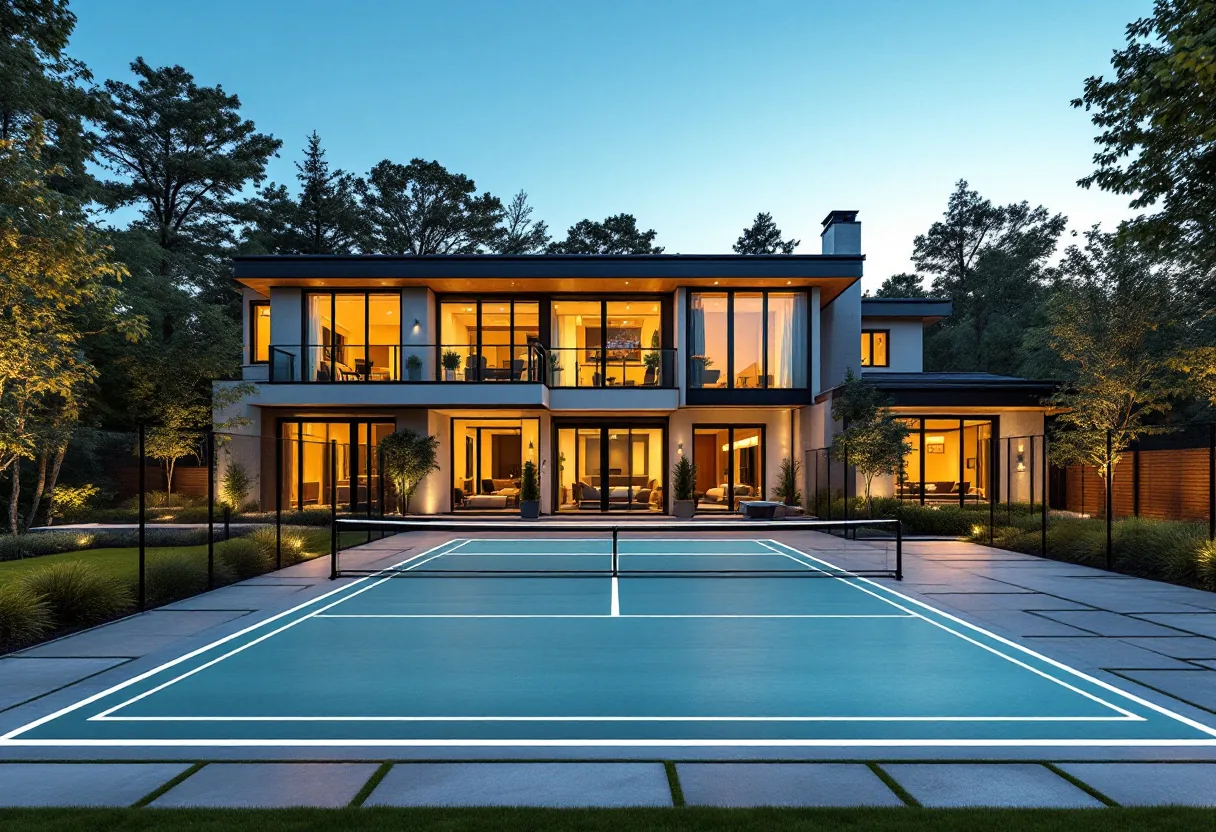
Quieter equipment
You can attack the sound at its source. USA Pickleball maintains a quieter-equipment category — paddles and balls specifically evaluated for reduced noise — and switching to them lowers the sharpness of the pop without changing how the game plays much. For a private backyard court you control the equipment outright, so this is nearly free mitigation. For an HOA or club court, posting quiet-paddle guidance and stocking approved balls is a cheap, good-faith step that goes a long way with a skeptical board or neighbor.
Landscaping, orientation, and buffers
Dense evergreen plantings, a low earthen berm, or a solid perimeter wall all help scatter and absorb sound, and they soften the visual impact that often rides along with noise objections. Landscaping alone will not silence a court, but layered on top of distance and a real barrier it meaningfully improves the result — and it makes the court look like an amenity rather than an intrusion. Where you can, combine a solid barrier with a strip of plantings on the neighbor side for both acoustic and visual buffering.
Plan it in early: retrofitting noise fixes after neighbors complain almost always costs more and works less well than designing the court's placement, orientation, and barriers from the first drawing. If you are building an HOA or community court, treat noise planning as part of the approval package, not an afterthought.
Put it together for approval
The courts that sail through review are the ones whose owners show up with a noise plan: a site drawing that places the court away from homes, a solid barrier on the exposed sides, a note that play will use quieter approved equipment, and a landscaping buffer. That package answers the objection before it is raised. Whether it is a backyard court or a multi-court community complex, folding these measures into the build is far cheaper than fighting complaints later — and a free itemized quote can price the mitigation right alongside the court.
Frequently asked
As far as the lot allows. There is no universal number, and many communities set their own setback rules, so check local zoning — but as a planning principle, place the court at the far end of the property, orient play away from the nearest homes, and add a solid barrier if the distance is tight.
No. Standard chain-link is mostly open air and does almost nothing for sound. To block noise you need a solid, gap-free barrier tall enough to break the line of sight — acoustic panels, mass-loaded sound blankets on the fence, or a solid wall or berm.
Yes, especially near neighbors. USA Pickleball lists a quieter-equipment category, and switching reduces the sharp pop at the source with little effect on play. It is cheap mitigation and a strong good-faith gesture for HOA or club approval.