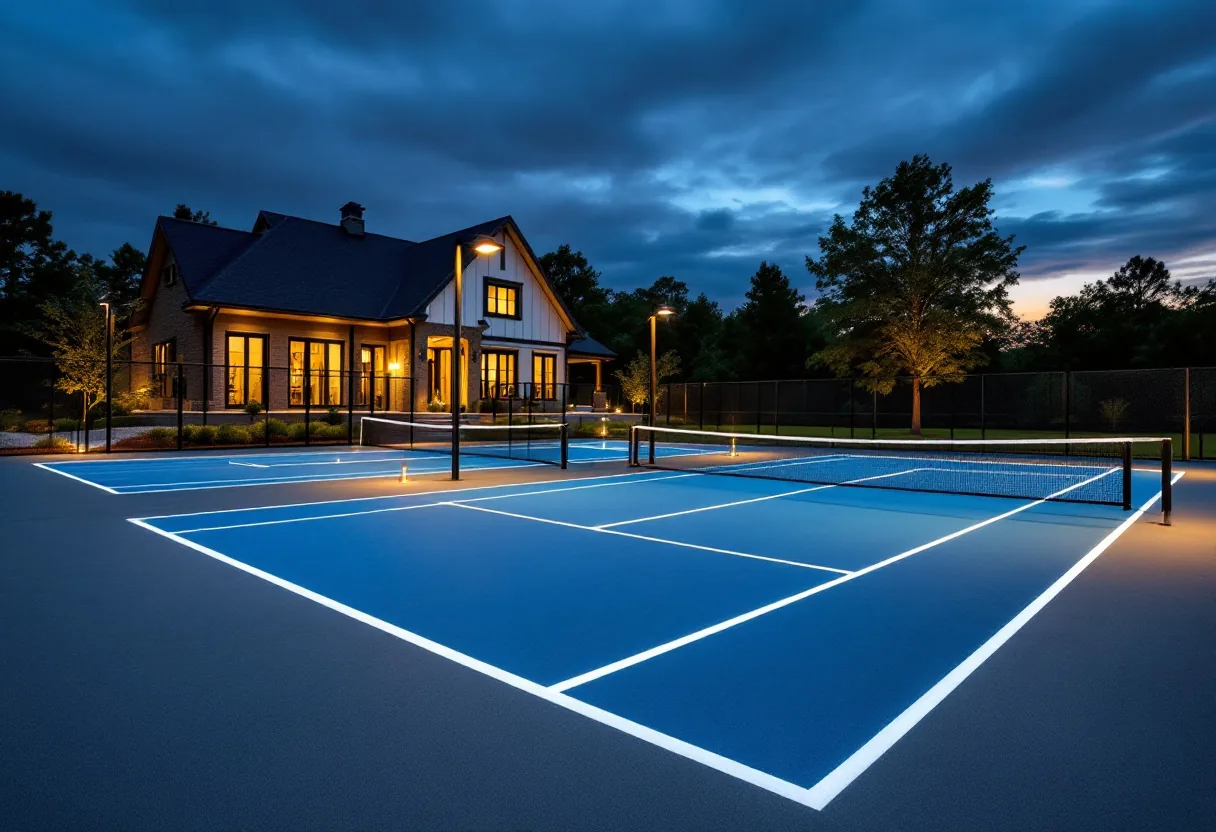
A pickleball is light and perforated, which makes it more sensitive to wind than a tennis ball. A steady gust across the court changes serves, ruins lobs and makes a good facility feel frustrating to play on. Sun is the second issue: a dark surface in direct summer light is uncomfortable, and glare affects play at certain hours. The good news is that both problems are easy to plan for when you design the court, and much harder to fix afterward. Use the cost calculator to set a base budget, then add these items on top.
Windscreens: about $80–$500+. A backyard court overall: $20,000–$50,000 ($11–$28/sq ft). Shade is the item most likely to need engineering and a permit, so decide on it early.
Why wind control matters
The playing area is 20 x 44 ft, and the recommended pad is 30 x 60 ft (1,800 sq ft). That pad is large enough to feel open, which also means wind has plenty of room to travel across it. Fencing helps by blocking the lowest and most disruptive air. Our fencing guide covers heights and types. A windscreen is the layer you add to the fence to finish the job.
Windscreen options at a glance
| Option | Best for | Things to know |
|---|---|---|
| Light mesh panels | Privacy and glare on a budget | Lets some air through, so wind reduction is modest |
| Heavy-duty screens | Windy sites | Blocks more air, which puts more load on fence posts |
| Partial-height screens | Spectator sightlines | Covers the lower fence only |
| Full-height screens | Maximum wind and privacy | Best results, highest wind load on the fence |
The key tradeoff is simple. A screen that blocks more wind also catches more wind, and that force is transferred to the fence and its footings. If you plan to add heavy screening, tell your builder up front so the posts and footings are sized for it. Bolting heavy fabric onto a fence that was designed without it is a common way to damage both.
Shade options
Shade comes in three practical levels. The simplest is shade beside the court: a covered seating area, trees placed with care, or a freestanding shade sail over the bench zone. This keeps players cool between games without touching the court structure. The second level is a fence-mounted shade sail or canopy along one side, which needs proper anchors. The third level is a roofed structure over the playing surface. That is a full building project with engineering requirements, and our guide to court permits explains why you should check local rules before planning one.
Trees deserve a caution. They look like free shade, but leaves, sap and roots all create maintenance problems on a court, so keep canopy overhead to a minimum and read our maintenance guide before planting near the pad.
Orientation and layout
Where the court points matters as much as what you hang on the fence. Aligning the long axis so players are not looking directly into low sun during the busiest hours reduces glare without adding any hardware. Prevailing wind direction is the second input: if you know which way the wind usually blows on your lot, your builder can place the court and any screens to take advantage of it. A lighter surface color can also feel cooler underfoot, so see court colors when you choose a finish.
How to budget
Treat windscreens as a low-cost accessory, with an expected range of roughly $80 to $500 or more. Treat shade as a project that scales with ambition. Shade beside the court is modest, while a roofed court is a major structure that can approach the cost of the court itself and should be quoted separately. Ask every bidder to price these as separate line items so you can add or drop them without redoing the whole estimate. Our cost guide shows the full breakdown for the court itself.
Questions to ask your builder
Ask whether the fence posts and footings are rated for the screens you plan to add, whether screens are included or priced separately, how they attach, and whether anything you want needs a permit. A good builder will answer all four without hesitation, and a free quote is the easiest way to compare those answers across contractors.
Frequently asked
Not required, but wind is the biggest complaint on open courts because the plastic ball is light. A windscreen on the fence reduces gusts across the playing area and also improves privacy and visibility of the ball.
Windscreens for a court typically run from about $80 to $500 or more depending on length, material weight and whether you buy basic panels or a heavy-duty, wind-rated system.
Yes. Options range from shade sails and covered seating areas beside the court to full roofed structures. A roof over the playing surface is a structural project that needs engineering and, in most areas, a permit.